


The Shocking Truth About Digital Amnesia: Is Your Brain on Backup?
By Translator and Author Serena Bader
You reach for your phone to remember what your brain forgot. Sound familiar?
You start asking yourself, “Aren’t I too young for this?” You are. But you might be experiencing Digital Amnesia, a modern side effect of living in a world where everything lives inside our phones.
Our brains used to work hard. Now? They send us straight to Google the moment something slips. Even if it’s something tiny like a movie title, a date, or how many grams are in a cup. Why would your brain bother memorizing a recipe when a video can play it back a thousand times on demand? Convenience is king. And our memory? It’s on vacation.
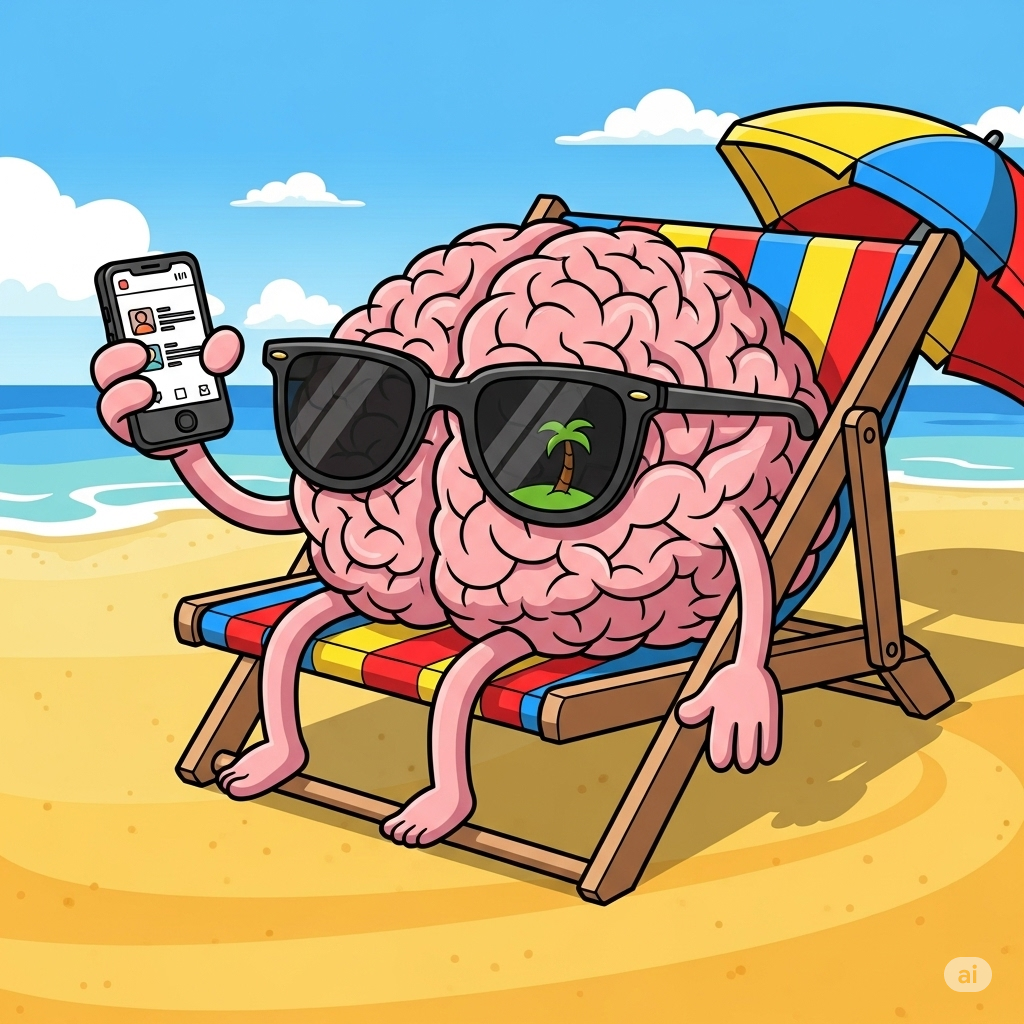
Cognitive Offloading: Outsourcing Memory to Technology
The more we lean on our phones to remember, the less our brains bother trying. It’s called cognitive offloading, basically, outsourcing memory to technology. We don’t remember facts anymore; we remember where to find them. Like using our laptops or phones to write something every day and forgetting how to use a pen.
At first, it feels like you’re winning cause why waste brainpower when your phone’s got your back? But slowly, things start to slip. Your focus thins out, details get fuzzy, and remembering feels harder than it should. It’s not that your brain’s broken; it’s just learned to take it easy. But here’s the real question: what happens when your phone isn’t around to bail you out?
Memory paused: digital amnesia meets Alzheimer’s
It sounds like something out of a sci-fi movie, but the reality is creeping closer every day. On one hand, we have digital amnesia: that daily brain fog where our memories take a backseat because we trust our phones to do the remembering for us. On the other, there’s Alzheimer’s disease, a serious scary condition that many people fear and that physically damages the brain and erases memories in a way no smartphone ever could.
What’s really getting experts talking is how these two memory problems, Alzheimer’s and digital forgetfulness, seem to be showing up together more often, especially in younger people. Alzheimer’s isn’t just a “later in life” thing anymore. More and more cases are popping up in people under 65. And while researchers don’t have all the answers yet, a lot of them are starting to wonder: is our constant digital overload, all the Googling, the mindless scrolling, the way we don’t bother remembering anything anymore, actually making our brains weaker?
We don’t know for sure if staring at screens all day causes Alzheimer’s, but it’s clear our brains need a little action to stay in shape. Just like your body gets rusty without moving, your mind gets fuzzy if you don’t give it a workout. So yeah, tech is awesome, but don’t let it do all the heavy lifting. Keep challenging yourself to remember stuff, think things through, and stay curious. Your brain will thank you later.
Brain Muscles or Memory Loss?
Think of your brain like a muscle, if you don’t use it it gets a little lazy. A 2016 study found that when we stop flexing our mental muscles and let our phones do all the remembering, the parts of our brain that handle memory start to slack off. It’s like putting your brain on cruise control. Need a fact? Google it. Lost your way? GPS. Forgot a birthday? There’s an alert for that. Sounds great, right? But here’s the catch: all that convenience can make our brains a bit… soft. And when it comes to remembering the little things that make life interesting, a lazy brain isn’t going to cut it.
Let’s be real, our brains are incredible, but they’re not superheroes. If we keep letting our phones do all the heavy lifting, we might find ourselves forgetting more than we’d like.
The good news? We can totally get those brain muscles back. Start small: try remembering things without Googling, write stuff down by hand (yes, with a pen!), take screen breaks, step outside, and just let your mind wander sometimes. Think of it as a workout for your brain, and trust me, it’s way more fun than you’d expect.
Plot Twist: Your Brain Misses You
Fun fact: Your brain lives for challenges: remembering weird facts, solving problems, and singing that random 2007 song on loop. But when you hand everything over to Google, your brain takes the backseat… and eventually just stops trying. It’s not lazy, it’s just uninvited.
Memory isn’t just about storing stuff; it’s how your brain stays sharp, creative, and curious. So next time you forget something, resist the urge to Google it instantly. Let your brain stretch a little. It might surprise you.
Your brain hasn’t gone anywhere. It’s just waiting for a comeback, and it’s totally ready for it. The more you rely on your brain to remember and figure things out, the more it builds resilience and flexibility. It’s like keeping your mental toolbox well-stocked and ready for anything. So instead of switching to autopilot and letting your phone do all the work, give your mind the chance to flex. You might find that memories come back easier, ideas flow better, and your creativity sparks in ways you didn’t expect. Your brain’s just waiting for the green light to shine again.
About the author
Serena Bader is a dedicated translation student at Université Saint-Joseph (USJ) who has a passion for writing trendy and insightful articles that resonate with today’s readers. She enjoys exploring how current social and technological trends shape our everyday lives and culture. Serena combines her academic background with her love for storytelling to create content that is both engaging and thought-provoking. Always curious and eager to learn, she aims to bridge different worlds through her writing, making complex ideas accessible and relevant. Outside of writing, Serena is fascinated by language, culture, and how they connect us all.